
How Much Food Should My Child Be Eating?
- hughesy42
- Jul 28
- 4 min read
A Parent's Guide to Healthy Portion Sizes for Young Children
As parents, one of the most common questions we hear is:
"Is my child eating enough?"
Whether your little one seems to eat everything in sight or survives on three peas and a yoghurt, it's completely normal to worry about how much food they should be eating.
The good news is that young children are incredibly good at listening to their bodies. Their appetites naturally change from day to day depending on how active they have been, whether they are growing, and even how well they have slept.
Rather than focusing on getting children to finish everything on their plate, it's more important to offer a variety of healthy foods in child-sized portions and allow them to decide how much they want to eat.
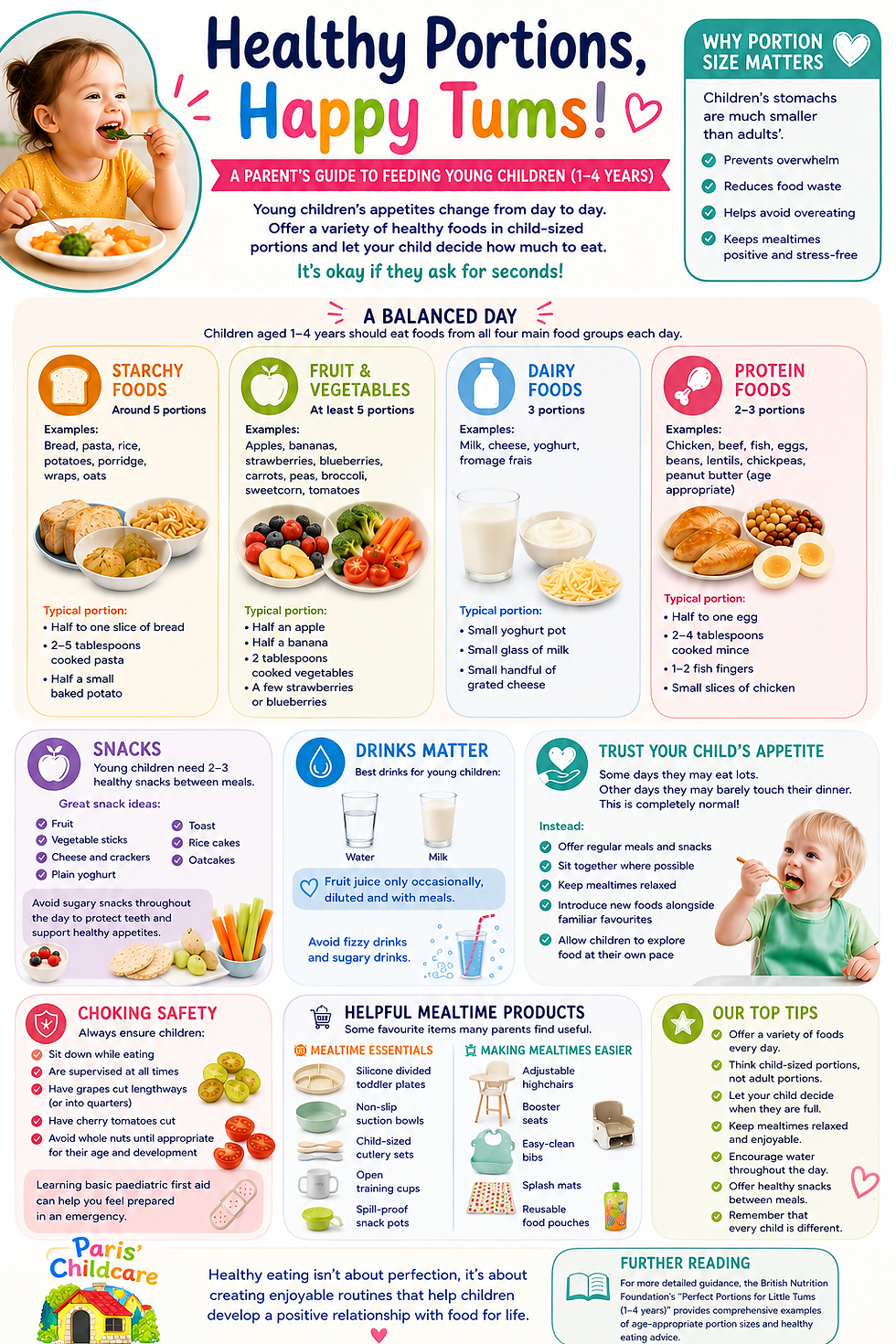
Why Portion Size Matters
Children's stomachs are much smaller than adults'.
Serving adult-sized portions can:
overwhelm children
increase food waste
encourage overeating
make mealtimes stressful
Smaller portions are much less intimidating and children can always ask for more if they are still hungry.
Remember...
It's perfectly okay for your child to ask for seconds!
What Does a Balanced Day Look Like?
Children aged 1-4 years should eat foods from all four main food groups each day.
🥔 Starchy Foods (Around 5 portions)
These provide energy for busy little bodies.
Examples include:
Bread
Pasta
Rice
Potatoes
Porridge
Wraps
Oats
Typical portion:
Half to one slice of bread
2-5 tablespoons cooked pasta
Half a small baked potato
🍎 Fruit and Vegetables (At least 5 portions)
Aim to include fruit or vegetables with every meal and snack.
Good options include:
Apples
Bananas
Strawberries
Blueberries
Carrots
Peas
Broccoli
Sweetcorn
Tomatoes
Typical portion:
Half an apple
Half a banana
2 tablespoons cooked vegetables
A few strawberries or blueberries
🥛 Dairy Foods (3 portions)
These provide calcium for healthy bones and teeth.
Examples include:
Milk
Cheese
Yoghurt
Fromage frais
Typical portions:
Small yoghurt pot
Small glass of milk
Small handful of grated cheese
🍗 Protein Foods (2-3 portions)
Protein helps children grow and repair their bodies.
Examples include:
Chicken
Beef
Fish
Eggs
Beans
Lentils
Chickpeas
Peanut butter (age appropriate and allergy considered)
Typical portions:
Half to one egg
2-4 tablespoons cooked mince
1-2 fish fingers
Small slices of chicken
What About Snacks?
Young children often need 2-3 healthy snacks between meals because their tummies are smaller.
Great snack ideas include:
✅ Fruit
✅ Vegetable sticks
✅ Cheese and crackers
✅ Plain yoghurt
✅ Toast
✅ Rice cakes
✅ Oatcakes
Try to avoid offering sugary snacks throughout the day as these can increase the risk of tooth decay and reduce appetite at mealtimes.
Drinks Matter Too
The best drinks for young children are:
💧 Water
🥛 Milk
Fruit juice should only be offered occasionally, diluted, and ideally with meals.
Avoid fizzy drinks and sugary drinks wherever possible.
Trust Your Child's Appetite
Some days your child may eat lots.
Other days they may barely touch their dinner.
This is completely normal.
Healthy children are usually very good at regulating how much food they need. Avoid pressuring children to finish their plate or rewarding them for eating everything, as this can interfere with their natural hunger cues.
Instead:
Offer regular meals and snacks.
Sit together where possible.
Keep mealtimes relaxed.
Introduce new foods alongside familiar favourites.
Allow children to explore food at their own pace.
Choking Safety
Always ensure children:
Sit down while eating.
Are supervised at all times.
Have grapes cut lengthways (or ideally into quarters).
Have cherry tomatoes cut.
Avoid whole nuts until appropriate for their age and development.
Learning basic paediatric first aid can also help parents feel confident in knowing what to do in an emergency.
Helpful Mealtime Products for Parents
Below are some products many families find useful.
🍽️ Mealtime Essentials
Silicone divided toddler plates - https://amzn.to/4aGP1FW
Non-slip suction bowls - https://amzn.to/4yc2gZa
Child-sized cutlery sets - https://amzn.to/4fq2B36
Open training cups - https://amzn.to/4waCxiJ
Spill-proof snack pots - https://amzn.to/4f04Bh5
🪑 Making Mealtimes Easier
Adjustable highchairs - https://amzn.to/4aK5CbT
Booster seats - https://amzn.to/4pjQRTd
Easy-clean bibs - https://amzn.to/3Tp6e0A
Splash mats - https://amzn.to/4p9hIkR
Reusable food pouches - https://amzn.to/3R1oDQw
Our Top Tips
✔ Offer a variety of foods every day.
✔ Think child-sized portions, not adult portions.
✔ Let your child decide when they are full.
✔ Keep mealtimes relaxed and enjoyable.
✔ Encourage water throughout the day.
✔ Offer healthy snacks between meals.
✔ Remember that every child is different.
Growth isn't measured by one meal or one day, it's the healthy habits built over months and years that make the biggest difference.
Final Thoughts
At Paris' Childcare Services, we know that mealtimes can sometimes feel challenging, especially with toddlers and preschool children. The most important thing is to provide a balanced range of healthy foods, keep mealtimes positive, and trust your child's appetite.
Healthy eating isn't about perfection, it's about creating enjoyable routines that help children develop a positive relationship with food for life.
Further Reading
For parents who would like more detailed guidance, the British Nutrition Foundation's "Perfect Portions for Little Tums (1–4 years)" provides comprehensive examples of age-appropriate portion sizes and healthy eating advice. 5532-booklet-sept21.pdf


Comments