
📱 Screen Time for Children: A Parent’s Guide
In today’s digital world, screens are everywhere, from TVs and tablets to phones and laptops. While technology can be useful and engaging, it’s important to understand how much screen time is appropriate for young children, especially in their early years of development.
This guide is here to support parents in making informed, balanced choices about screen time for children.
👶 Children Under 2: Why Screens Should Be Avoided
For babies and toddlers under the age of two, the recommendation is clear: screen time should be avoided altogether, unless it is part of a shared, meaningful activity.
At this stage, children learn best through:
Face-to-face interaction
Physical play
Exploring their environment
Listening and responding to real voices
Passive screen use (like watching videos alone) does not support these essential developmental needs. In fact, too much exposure can impact:
Language development
Attention span
Sleep patterns
If screens are used, they should always be:✔️ Short✔️ Supervised✔️ Interactive (e.g., video calls with family or singing along together)
🧒 Ages 2–5: Building Healthy Habits
As children grow, small amounts of screen time can be introduced, but quality and balance are key.
Guidance suggests:
No more than 1 hour per day
Content should be age-appropriate and educational
Screens should never replace play, sleep, or social interaction
Try to:
Watch or engage together with your child
Talk about what they’re seeing
Link screen content to real-life experiences
⚖️ Why Balance Matters
Too much screen time can:
Reduce physical activity
Impact sleep (especially before bedtime)
Limit social interaction and communication skills
Children thrive on routine, connection, and real-world exploration. Screens should be just one small part of a varied day.
🏡 Practical Tips for Families
Here are some simple ways to keep screen time healthy:
📵 Create screen-free zones (e.g., bedrooms, mealtimes)
⏰ Set clear limits and routines
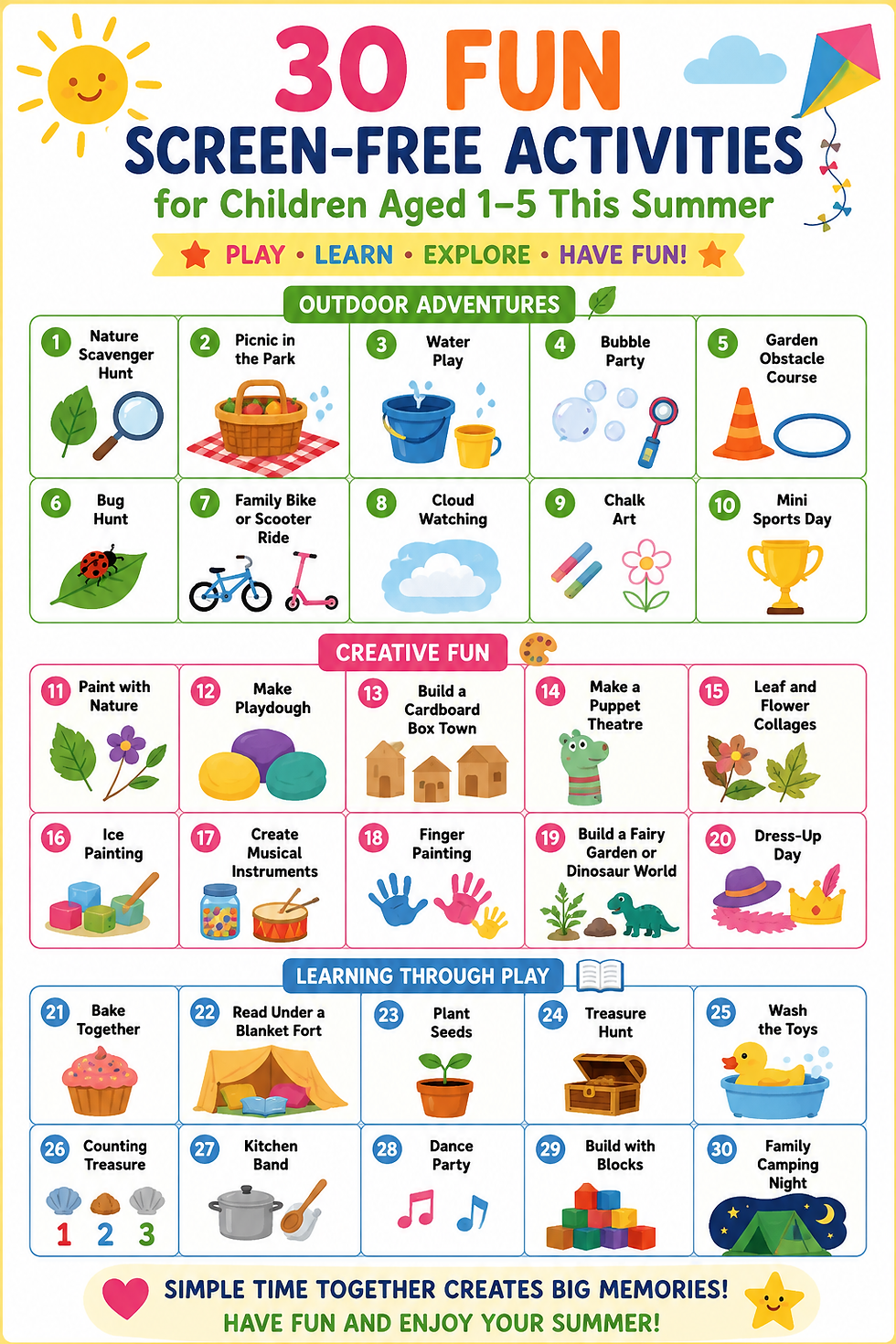
🌿 Encourage outdoor play and hands-on activities
📚 Choose books, puzzles, and creative play instead
😴 Avoid screens at least 1 hour before bedtime
❤️ Our Approach in Childcare
In our setting, we prioritise:
Play-based learning
Social interaction
Physical development
Communication and language skills
For this reason, we do not use screens as part of our daily routine, particularly for younger children. This aligns with best practice guidance and supports your child’s development in the most effective way.
✨ Key Takeaways
❌ Children under 2 should not use screens, unless part of a shared activity
⏳ Older children should have limited, high-quality screen time
👨👩👧👦 Interaction with adults is far more valuable than passive viewing
🌱 Real-world play is essential for healthy development



Comments